
Quick Answer: What Is Frozen Shoulder?
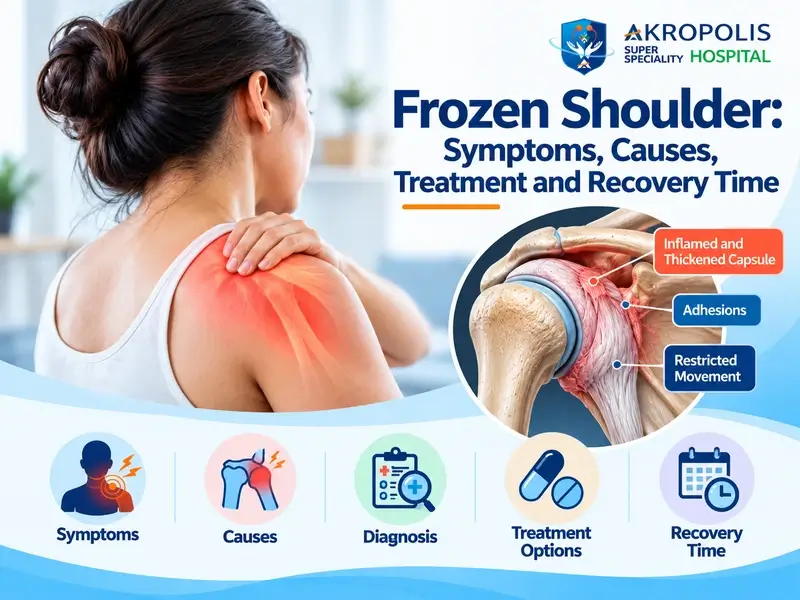
Frozen shoulder, also called adhesive capsulitis, is a condition that causes shoulder pain and progressive stiffness. The capsule surrounding the shoulder joint becomes inflamed and tight, making it difficult to move the arm freely. Frozen shoulder treatment may include pain management, gentle exercises and physiotherapy. Recovery varies from person to person and can take several months to a few years.
Shoulder stiffness can make everyday activities surprisingly difficult. Reaching for a shelf, putting on a shirt, combing your hair or sleeping comfortably may become painful when shoulder movement is restricted.
One possible cause is frozen shoulder. The condition usually develops gradually and can affect both active movement, when you move your arm yourself, and passive movement, when another person or a clinician moves your arm for you.
Understanding Frozen Shoulder symptoms, causes, treatment and recovery time can help you recognise when to seek medical advice and how to manage the condition safely.
What Is Frozen Shoulder?
Frozen shoulder, medically known as adhesive capsulitis, affects the capsule of connective tissue surrounding the shoulder joint. In a healthy shoulder, this capsule allows the joint to move through a wide range of positions.
With frozen shoulder, the capsule becomes inflamed, thickened and tight. Adhesions may develop, further restricting movement. The result is usually a combination of pain and stiffness that develops over time.
Frozen shoulder is different from ordinary muscle soreness. The restriction often affects several directions of movement, including lifting the arm and rotating it outward. However, other shoulder conditions can cause similar symptoms, so a clinical assessment is important.
Frozen Shoulder Symptoms
Frozen Shoulder symptoms usually begin gradually. Some people first notice pain, while others mainly experience stiffness that becomes more obvious over several weeks or months.
Common symptoms include:
- Shoulder pain: A dull ache or deeper pain around the shoulder that may worsen with movement.
- Night pain: Discomfort that makes sleeping difficult, particularly when lying on the affected side.
- Progressive stiffness: Increasing difficulty moving the arm in everyday activities.
- Reduced range of motion: Difficulty reaching overhead, behind the back or away from the body.
- Difficulty with daily tasks: Challenges with dressing, washing, grooming and reaching for objects.
- Pain during stretching: Discomfort when the shoulder is moved towards the limits of its available range.
When shoulder pain needs urgent attention
Do not assume that every painful or stiff shoulder is frozen shoulder. Sudden severe pain after an injury, a visibly deformed shoulder, new arm weakness or numbness, or a hot and swollen joint with fever requires prompt medical assessment. Shoulder pain accompanied by chest pressure or pain, breathlessness, sweating or faintness may be an emergency.
Frozen Shoulder Causes and Risk Factors
Frozen Shoulder causes are not always clear. In many cases, the condition develops without a specific injury or identifiable event. It is thought to involve inflammation and changes in the shoulder joint capsule.
Some circumstances are associated with a higher risk of developing frozen shoulder.
| Risk factor | How it may be related |
|---|---|
| Diabetes | Frozen shoulder occurs more frequently in people with diabetes. |
| Prolonged immobility | Keeping the shoulder still for an extended period after an injury, surgery or illness may contribute to stiffness. |
| Shoulder injury or surgery | Pain and restricted movement during recovery may increase the risk in some people. |
| Age | The condition is most common in adults between 40 and 60 years of age. |
| Other health conditions | Some thyroid disorders and other medical conditions have been associated with an increased risk. |
Frozen shoulder is more common in women than in men. Having a risk factor does not mean that someone will definitely develop the condition, and people without known risk factors can also experience it.
The Three Stages of Frozen Shoulder
Frozen shoulder is commonly described in three stages. These stages help explain how symptoms may change, but the timing and severity vary. Not everyone experiences clearly separated stages.
| Stage | What may happen | Typical pattern |
|---|---|---|
| Freezing stage | Pain gradually increases, and shoulder movement begins to become restricted. | Often lasts several weeks to months. |
| Frozen stage | Pain may become less intense, but stiffness and restricted movement can remain significant. | May last several months. |
| Thawing stage | Shoulder movement gradually improves as stiffness decreases. | Recovery may continue over many months. |
These timeframes are approximate, not deadlines. Pain can persist during more than one stage, and improvement may be slow rather than steady.
How Is Frozen Shoulder Diagnosed?
A healthcare professional will usually begin by asking about your symptoms, when they started, any previous injury or surgery, your medical history and how the pain affects everyday activities.
The physical examination is particularly important. The clinician may assess how far you can move the shoulder yourself and how much movement is possible when the arm is moved with assistance. Restricted movement in both situations can support a diagnosis of frozen shoulder.
| Assessment | Purpose |
|---|---|
| Medical history | Identifies the symptom pattern, previous injuries, surgery and relevant health conditions. |
| Physical examination | Assesses pain, stiffness, strength and shoulder range of motion. |
| X-ray | May help identify arthritis, fractures or other bone-related problems that can cause similar symptoms. |
| Ultrasound or MRI | May be recommended when the clinician needs to investigate other causes, such as rotator cuff problems. These tests are not necessary in every case. |
Frozen shoulder is generally diagnosed through the history and examination, with imaging used when needed to investigate alternative explanations. An MRI is not automatically required for every patient.
Frozen Shoulder Treatment Options
Frozen Shoulder treatment aims to reduce pain, preserve or gradually improve movement and help you return to everyday activities. Treatment depends on symptom severity, the stage of the condition, the individual medical history and response to earlier treatment.
1. Pain management and activity changes
Your doctor may recommend suitable pain relief to make daily activities and gentle movement more manageable. The right medicine depends on your medical history, other medicines and any existing health conditions. Do not start or increase medication without checking whether it is appropriate for you.
Try to keep the shoulder gently active within a comfortable range. Avoid prolonged unnecessary immobilisation unless a clinician has advised it, but also avoid movements that repeatedly cause severe pain.
2. Physiotherapy and gentle exercises
Physiotherapy may help maintain mobility and gradually improve shoulder movement. A physiotherapist can tailor the exercises to your symptoms and current range of motion.
Exercises may include:
- Pendulum exercise: Lean forward while supporting yourself with your unaffected arm, then allow the affected arm to hang relaxed and make small, gentle movements.
- Supported forward reach: Use your unaffected arm or a suitable surface to assist a gentle forward movement of the affected arm.
- Gentle external rotation: With your elbow close to your body, use a stick or your other hand to guide a small outward movement if advised by your physiotherapist.
- Supported wall movement: Slide your hand up a wall only as far as comfortable, without forcing the shoulder.
These are examples, not a personalised exercise prescription. Stop an exercise if it causes sharp pain, a significant increase in symptoms or worsening pain that does not settle. Forceful stretching may aggravate an irritable shoulder, especially during the painful early stage.
3. Heat or cold therapy
Some people find a warm pack helpful before gentle movement, while a cold pack may help ease discomfort after activity. Use a cloth barrier between the pack and your skin, limit application time and avoid extreme temperatures. Do not apply heat or cold to areas with reduced sensation without professional advice.
4. Corticosteroid injections
A clinician may consider a corticosteroid injection into or around the shoulder joint to help reduce pain, particularly when symptoms are severe. In suitable patients, an injection may provide short-term relief and make movement or physiotherapy easier.
An injection does not guarantee complete recovery or immediately remove all stiffness. Benefits, risks and suitability should be discussed with the treating clinician. People with diabetes should also discuss possible temporary changes in blood glucose after a corticosteroid injection.
5. Other procedures for persistent symptoms
If pain and restricted movement remain substantial despite appropriate non-surgical treatment, a specialist may discuss additional options.
- Hydrodilatation: A procedure in which fluid is injected into the joint to help stretch the tight capsule.
- Manipulation under anaesthesia: The shoulder is moved by a clinician while the patient is under anaesthesia. This is considered selectively and has potential risks.
- Arthroscopic capsular release: A surgical procedure that releases part of the tight joint capsule in selected cases.
These procedures are not routine first-line treatment. Their potential benefits, risks and rehabilitation requirements should be reviewed with an orthopaedic specialist. Surgery is needed only in a minority of cases.
Frozen Shoulder Recovery Time
Frozen Shoulder recovery time differs between individuals. Many people improve gradually over several months, while others need one to three years or sometimes longer to regain comfortable movement. Some may continue to experience residual stiffness even after pain improves.
| Recovery factor | What to understand |
|---|---|
| Pain relief | Pain may improve before the shoulder regains its full range of motion. |
| Movement improvement | Progress is often gradual and may vary from week to week. |
| Physiotherapy | A suitable plan may help maintain mobility, but it does not guarantee a particular recovery date. |
| Underlying health conditions | Diabetes and other individual health factors may affect the course of the condition. |
| Complete recovery | Recovery may take many months or years, and some people retain a degree of stiffness. |
There is no single treatment that guarantees a rapid cure. The aim is to manage pain, maintain safe movement and support gradual functional improvement while avoiding unnecessary aggravation.
What Can You Do at Home?
Simple changes may help you manage symptoms while following the treatment plan recommended by your healthcare professional.
- Perform only gentle movements that are appropriate for your current symptoms.
- Follow the exercise plan provided by your physiotherapist rather than forcing the shoulder through pain.
- Use a comfortable sleeping position and support the affected arm with a pillow if helpful.
- Adjust activities that repeatedly trigger pain, while avoiding unnecessary long-term immobilisation.
- Keep follow-up appointments if symptoms are persistent or treatment needs adjustment.
- If you have diabetes, continue appropriate diabetes care and discuss shoulder symptoms with your doctor.
Do not rely on home exercises alone if the diagnosis is uncertain, symptoms are worsening or daily activities are becoming increasingly difficult.
When Should You Consult an Orthopaedic Specialist?
Consider a medical assessment if shoulder pain or stiffness persists, interferes with sleep, limits dressing or grooming, or prevents you from carrying out routine activities.
An orthopaedic specialist can assess whether frozen shoulder is the likely cause or whether another condition, such as a rotator cuff injury, arthritis or a neck-related problem, may be responsible.
You can learn more about the orthopaedic services at Akropolis Super Speciality Hospital or read about Dr Prateek Girotra.
Get Your Shoulder Pain Assessed
Persistent shoulder pain and stiffness deserve a proper assessment. Discuss your symptoms with a qualified healthcare professional and understand which treatment options may be suitable for you.
Book a ConsultationConclusion
Frozen shoulder can cause persistent pain and significant restriction in shoulder movement, making everyday tasks difficult. Symptoms often develop gradually, and recovery may take several months or years.
Appropriate pain management, gentle movement and physiotherapy can help many people manage the condition. In selected cases, injections or specialist procedures may be considered. Because other shoulder conditions can cause similar symptoms, an accurate assessment is important before starting treatment.
Medical References and Further Reading
-
Mayo Clinic: Frozen Shoulder Symptoms and Causes
Learn about common symptoms, risk factors and the gradual development of frozen shoulder. This resource helps explain why shoulder pain and stiffness may increase over time and when medical evaluation may be appropriate.
-
Cleveland Clinic: Frozen Shoulder (Adhesive Capsulitis)
Explore how frozen shoulder affects the joint capsule, the typical stages of the condition, associated risk factors and available treatment approaches. It also provides useful context about the gradual nature of recovery.
-
NHS inform: Frozen Shoulder
Review practical guidance on managing shoulder pain and stiffness, staying gently active and approaching exercises safely. This resource also explains that improvement can take considerable time and that recovery varies between individuals.
-
Harvard Health Publishing: How to Release a Frozen Shoulder
Find guidance on gentle shoulder stretches and mobility exercises that may help manage stiffness. The article also explains why movements should be performed carefully and should not be forced through significant pain.